

Last week we began our study of Spiritual Anatomy, starting near the feet with the Achilles Heel. This week we flip to the other end of the body and will be talking about the eyes. Truth be told, we could spend 3 or 4 weeks on the eyes and never cover everything. That said, tonight we will focus specifically on eyesight and learn a little about how the eyes themselves operate.
It is an often-overused cliché or turn of phrase that states “the eyes are the window to the soul” this is a worldly perversion of Matthew 6:22:
The lamp of the body is the eye. If therefore your eye is good, your whole body will be full of light.
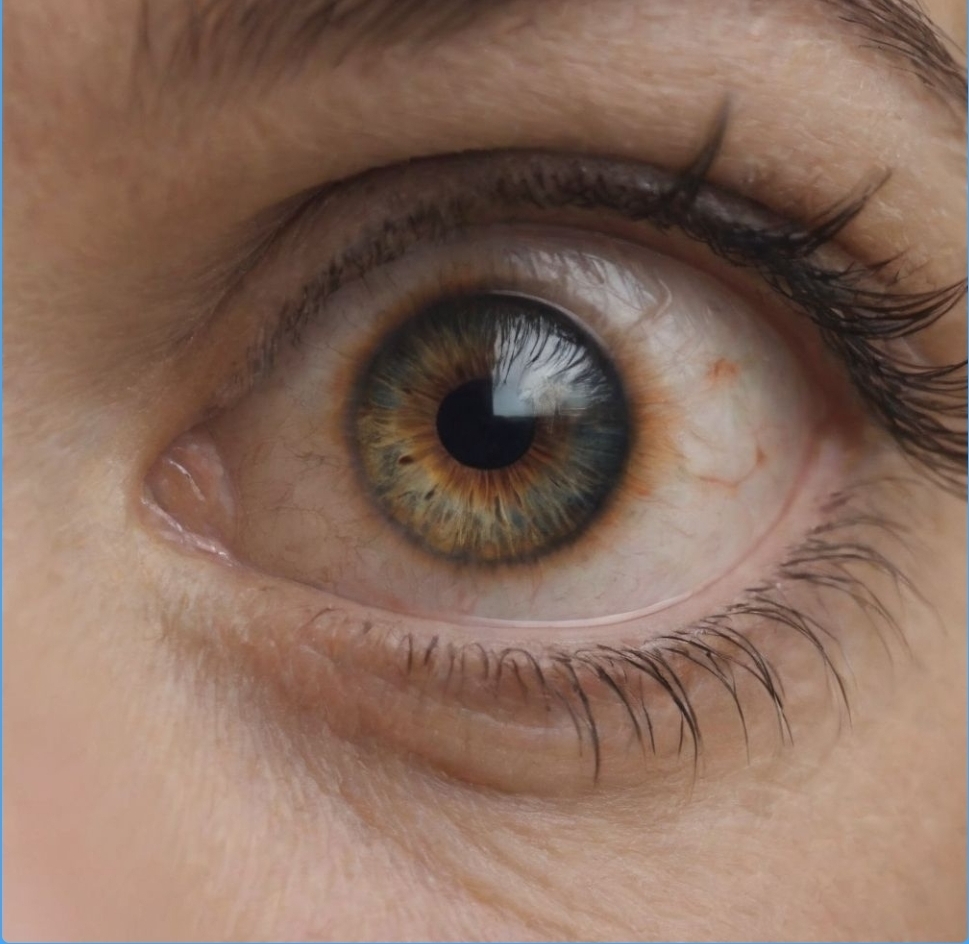
The eyes are obviously how we see things. It is how we perceive light, thus corroborating Matthew 6:22. But the human eye functions as a much more complex optical instrument, converting that light into visual images. Without being able to see the light, as it were, we would live in literal darkness. That isn’t to say that a blind person can’t “see the light” – as they can detect light, it just doesn’t enter their eye the same scientific way. Only a very small percentage of those who are blind from birth cannot perceive light in any way. Most of us – not all, but most – are awakened by light coming into a room upon daybreak. When I was a teenager, my bedroom was in the basement and there were no windows. This worked well for me when I was working third shift and had to sleep during the day but when I wasn’t working third shift it was a detriment if I had to be up by a certain time and forgot to set my alarm. Now, even if I want to sleep in, I can’t once the light breaks through the curtains. For a blind person this is not the case. That twinkling of light will not awaken them.
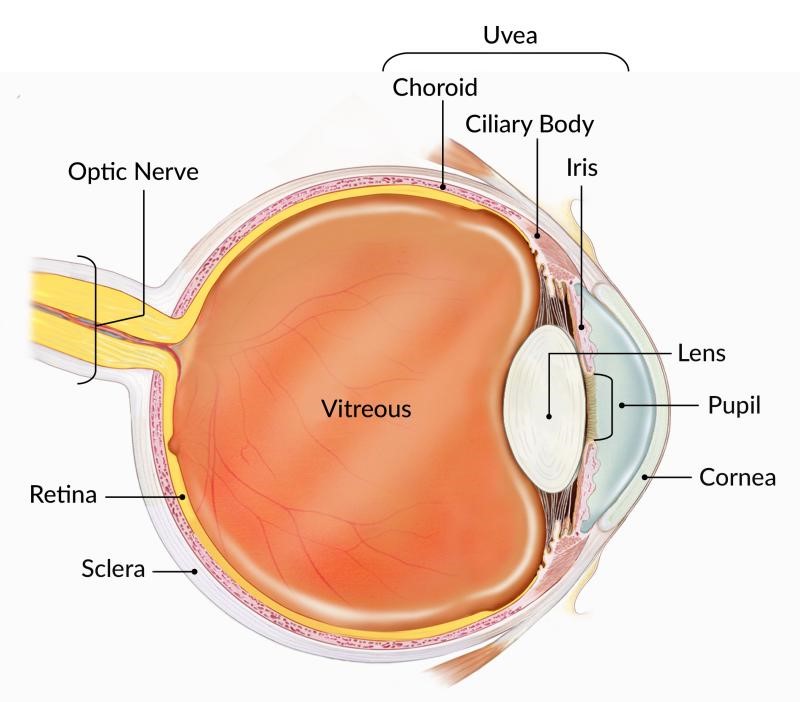
For clarification, the way this process functions is so intricate that only God could have designed it. Light passes through the cornea which is the clear front layer of the eye. The cornea is shaped like a dome and bends light to help the eye focus. Some of this light enters the eye through an opening called the pupil. The iris, which is the colored part of the eye, controls how much light the pupil lets in. Next, light passes through the lens, a clear inner part of the eye. The lens works together with the cornea to focus light correctly on the retina. When light hits the retina, which is a light-sensitive layer of tissue at the back of the eye, special cells called photoreceptors turn the light into electrical signals. These electrical signals travel from the retina through the optic nerve to the visual cortex in the brain. The cortex helps to identify and recognize objects based on their shape, size, color, and other features. It processes information about the location and distance of objects in the visual field. The cortex is involved in perceiving and interpreting movement. It helps to control eye movements that allow us to focus on specific objects. The visual cortex also contributes to more complex visual tasks, such as reading, writing, and recognizing faces.
A person blind from birth doesn’t “see” things in the way a sighted person does. They haven’t had input to their visual cortex, so they can’t form visual images or “see” in their minds’ eye. Consider times when you’ve been asked “imagine if you will, in your mind, a red ball” – we can do this because we know what red is. We know what a ball is. We can close our actual eyes and still “see” a red ball. The same is not the case for a person blind from birth. They don’t know what red is – not literally. Sure, they “know” it is a color but only because they’ve been taught such – but they have no experience to draw on to discern the color.
Instead, they experience the world through their other senses, relying on touch, sound, smell, and taste to understand and interact with their environment. They rely on these senses to navigate their world, learn about objects and people, and form mental representations of their surroundings. While they may not visualize things as sighted people do, they can still imagine using their other senses. For example, they might imagine the texture of a banana, the sound of a car, or the smell of coffee. Blind individuals learn about the world through interactions with their environment and through the descriptions of others. They may not have a visual understanding of something, but they can learn about its shape, size, and other characteristics through touch and other sensory experiences.
Have you ever experienced temporary blindness or been blind-folded?
I wear glasses, as do Christie, Chase, and EJ. We know what it is like to not see things clearly. I have an aunt who wasn’t born blind but went legally blind over time as her retina’s nearly completely detached due to a disease called Marfan’s Syndrome. Not being born blind though, she had context and memories to reference, albeit blurry, of how things are at the very least, outlined or shaped. She could draw on those experiences and remember what she saw when her vision was better. But even after being declared legally blind she could still see to some degree insomuch that she just couldn’t see things clearly at all and was never able to drive and in her 20’s got to the point where she could no longer safely ride a bicycle anymore or walk anywhere on her own as it was unsafe for her to cross roads not being able to make out on coming traffic. But it still wasn’t the same as being totally blind from birth.
Christie has an uncle that, while he was not born blind, went blind as an infant, so he has no memories to draw on and in effect has always been completely blind. He could have chosen to be bitter and angry at the world and at God but instead he chose to embrace his blindness, to deal with it through humor and to grow from it and develop his other senses. He also chose to be a Christ follower, even being ordained by the Assembly of God, and now pastoring a Pentecostal church in Maryland.

Despite his physical affliction he is one of the most gifted piano players I have ever heard tickle the ivories. I was absolutely mind blown the first time I heard him play. He is a real world example of Philippians 4:13.
I can do all things through Christ who strengthens me.
On a side note, I want to share that while doing research for this week I came across a VERY interesting YouTube channel of a man who has been blind since birth. On his channel he answers questions and explains things from a blind person’s perspective. It is worth checking out if you have ever wondered, as I have, what it must be like for someone to process a world they’ve never been able to see before. https://www.youtube.com/@TommyEdisonXP
Now that said, as I stated – wearing glasses corrects my vision. Meaning that I didn’t see things as they should appear. I could only see what my imperfect eyes allowed me to see…the shapes I can make out, my perception of colors, depth of field, etc. But when I put the corrective lenses on, I can better perceive the world as it truly is. This simple fact brings to mind the blind man at Bethsaida.
Mark 8:22-26
Then He came to Bethsaida; and they brought a blind man to Him, and begged Him to touch him. So He took the blind man by the hand and led him out of the town. And when He had spit on his eyes and put His hands on him, He asked him if he saw anything. And he looked up and said, “I see men like trees, walking.” Then He put His hands on his eyes again and made him look up. And he was restored and saw everyone clearly. Then He sent him away to his house, saying, “Neither go into the town, nor tell anyone in the town.”
This scripture has double meaning to me. Not only was he seeing things for the first time ever when Jesus healed him when he says he was seeing men as trees, but then he was seeing things for what they were on a Spiritual level having had divine spittle placed on his eyes. In other words, we see the world one way before we get saved and we see it entirely differently after we get saved. Without going into detail, there were things I didn’t find offensive or that I thought were “no big deal” before I got saved that now I would never do, say, or condone.
Do you remember a time in your life when you experienced spiritual blindness?
What I mean by that is that you didn’t see a person or a situation through a Godly lens and instead were fooled by what the enemy wanted you to see.
The best example of Jesus opening spiritual eyes is in Acts 9:8-17:
Then Saul arose from the ground, and when his eyes were opened he saw no one. But they led him by the hand and brought him into Damascus. And he was three days without sight, and neither ate nor drank. Now there was a certain disciple at Damascus named Ananias; and to him the Lord said in a vision, “Ananias.” And he said, “Here I am, Lord.” So the Lord said to him, “Arise and go to the street called Straight, and inquire at the house of Judas for one called Saul of Tarsus, for behold, he is praying. And in a vision he has seen a man named Ananias coming in and putting his hand on him, so that he might receive his sight.” Then Ananias answered, “Lord, I have heard from many about this man, how much harm he has done to Your saints in Jerusalem. And here he has authority from the chief priests to bind all who call on Your name.” But the Lord said to him, “Go, for he is a chosen vessel of Mine to bear My name before Gentiles, kings, and the children of Israel. For I will show him how many things he must suffer for My name’s sake.” And Ananias went his way and entered the house; and laying his hands on him he said, “Brother Saul, the Lord Jesus, who appeared to you on the road as you came, has sent me that you may receive your sight and be filled with the Holy Spirit.” Immediately there fell from his eyes something like scales, and he received his sight at once; and he arose and was baptized.
This passage always blows my mind. I mean, think for a minute if you were Ananias. You get told to go get the dude who had been stoning your fellow believers and was the head guy leading the charge to round believers up and now Jesus is appearing to you and telling you to go to him. I’d be like “Boss….are…are you sure? THIS guy? Really?” Ananias basically does but Jesus was all “Look, I’m telling you he’s the guy. Go to him.” But to the reader and Ananias’s dismay Saul became Paul and went on to write 14 books of the New Testament – 23.8% to be exact – which is more than any of the actual disciples; John came in at 20.35% followed by Matthew at 13.29%. Peter, who was the rock on which the church would be founded and whom Jesus asked would he lead his sheep, wasn’t even in the top three.
This is the epitome of Jesus not calling the qualified but qualifying the called. There were many among The Way that could have filled this role that Paul would take on. But how many of them would have the testimony that Paul had? Think about it – he’d be all like “Look man, you’ve got to understand – this is legit. I was the guy wiping these people out until the Lord opened my eyes, and let me tell you how He did it!!!”
We all have eyes – some work better than others – but we all have them. However, what we choose to see, in many cases, is in accordance to our spiritual health. Jesus’s very disciples were tested in this regard. He had just fed four thousand people off of 7 loaves of bread and a few fish. Don’t get confused, this isn’t the same as the feeding of the five thousand with five loaves and two fish – just another case of doing more with less, which is a whole other lesson in and of itself, but I digress. Going back to the scripture at hand, after He had done this the disciples were confused by what He was telling them right before they went to Bethsaida and He says (Mark 8:18) Having eyes, do you not see?
How often could we ask this to ourselves or to people we care about or people we know?
But eyesight dwindles with age. If you wear glasses like Christie, EJ, Chase, and I do, you know that your prescription changes. Eventually you have to get stronger glasses to compensate for your deteriorating eyesight. Unfortunately, in biblical times they didn’t have eyeglasses. How different would the course of the entire history of mankind went if they had? I’m serious now…think about it. Consider old man Isaac. He’s nearing the end of his life. His eyesight is terrible – he is nearly blind after all – and he was set to bless his firstborn, Esau, but through a deception orchestrated by Jacob and his mother Rebekah, Isaac accidentally blessed Jacob instead. This blessing, meant for Esau, included dominion over his brothers, which fueled Esau’s resentment towards Jacob.
We learned last week about how this led Esau to setting out to slay his brother Jacob in Genesis 32. While this whole thing was brought on by Jacob’s deception, it would not have been possible without Isaac’s failing eyesight. In a polar opposite of a person blind since birth; he had not honed his other senses to compensate for his eyesight – so in turn those other senses fueled the betrayal, and he was duped by Jacob and his mother by faking the scent and touch of Esau. Had this manipulation not happened though, Jacob doesn’t flee from Esau fearing for his life and he doesn’t wrestle with the angel of the Lord and his name doesn’t get changed to Israel. The rest, as they say, is history.
In closing we must always be aware of how important, even if our physical eyesight fail us, that our spiritual eyesight is something we should never let waver.
Psalm 121: 1-2
I will lift up my eyes to the hills—
From whence comes my help?
My help comes from the Lord,
Who made heaven and earth.
If we keep our spiritual eyesight fixed on the Lord we can never go wrong. In this way we ensure we always know Who makes a way where there is no way. To know and trust where our help comes from.
-DC


Leave a Reply