
Tonight is going to be different than our normal way of doing things. When preparing for this week I realized I would have to break the pattern of the normal lesson presentation and start with ALL of the scriptures that I felt were instrumental in the study for this week. Like my last lesson, which had to do with the eyes, there were so many scriptures that deal with the tongue and the words it produces, that it was difficult for me to narrow down ones to use this evening. That said, the ones I chose were applicable to the examples the Lord led me to, so these are ones I will cite. I’m also not going to pose questions to you throughout the study as both of us usually do. Instead, I will ask at the end.
Psalms 34:13
Keep your tongue from evil, And your lips from speaking deceit.
Psalms 141:3
Set a guard, O LORD, over my mouth; Keep watch over the door of my lips.
Proverbs 13:3
He who guards his mouth preserves his life, But he who opens wide his lips shall have destruction.
Proverbs 15:1-2
A soft answer turns away wrath, But a harsh word stirs up anger. The tongue of the wise uses knowledge rightly, But the mouth of fools pours forth foolishness.
Proverbs 18:21
Death and life are in the power of the tongue, And those who love it will eat its fruit.
Proverbs 21:23
Whoever guards his mouth and tongue Keeps his soul from troubles.
Matthew 15:11
Not what goes into the mouth defiles a man; but what comes out of the mouth, this defiles a man.
James 1:26
If anyone among you thinks he is religious, and does not bridle his tongue but deceives his own heart, this one’s religion is useless.
James 3:5-6
Even so the tongue is a little member and boasts great things. See how great a forest a little fire kindles! And the tongue is a fire, a world of iniquity. The tongue is so set among our members that it defiles the whole body, and sets on fire the course of nature; and it is set on fire by hell.
1 Peter 3:10
For “He who would love life And see good days, Let him refrain his tongue from evil, And his lips from speaking deceit.”
Words.
They fuel the human mind and emotions and, when used in certain ways, or presented in a particular way, can have a profound effect on humanity.
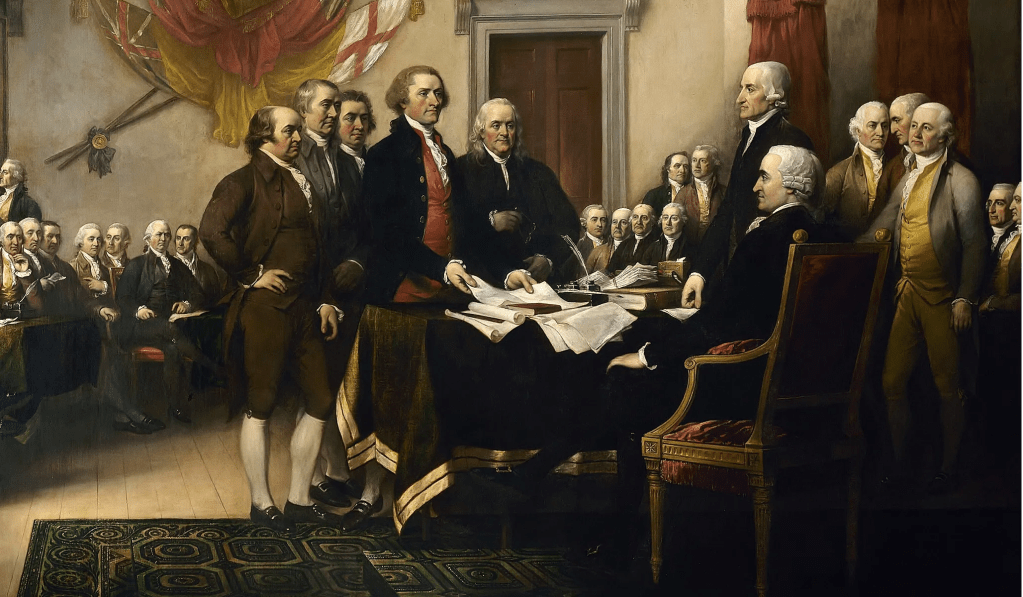
Words can change the world as we know it. Our nation has had a way of doing just that on many occasions. In June of 1776 Thomas Jefferson was writing what would come to be known as the Declaration of Independence. While drafting this document he had been tasked with establishing and explaining exactly WHY the Continental Congress was voting to declare independence from England, hence the simple name of the document, attributed to it by Ben Franklin during the actual vote and ratification in Philadelphia on July 4th, 1776. It is said that while a majority of the document was edited before the final draft was approved by the group that the one line they all agreed to right out of the chute and that is said to have had one of the largest impacts on freedom worldwide since the day it was transcribed is “We hold these truths to be self-evident, that all men are created equal, that they are endowed by their Creator with certain unalienable Rights, that among these are Life, Liberty, and the pursuit of Happiness.” A little known fact to share next month with those you may celebrate with if you aren’t going to be here for our get together, is that – like Christmas – we celebrate on the wrong day. As it was not formally signed though, until August 2nd.
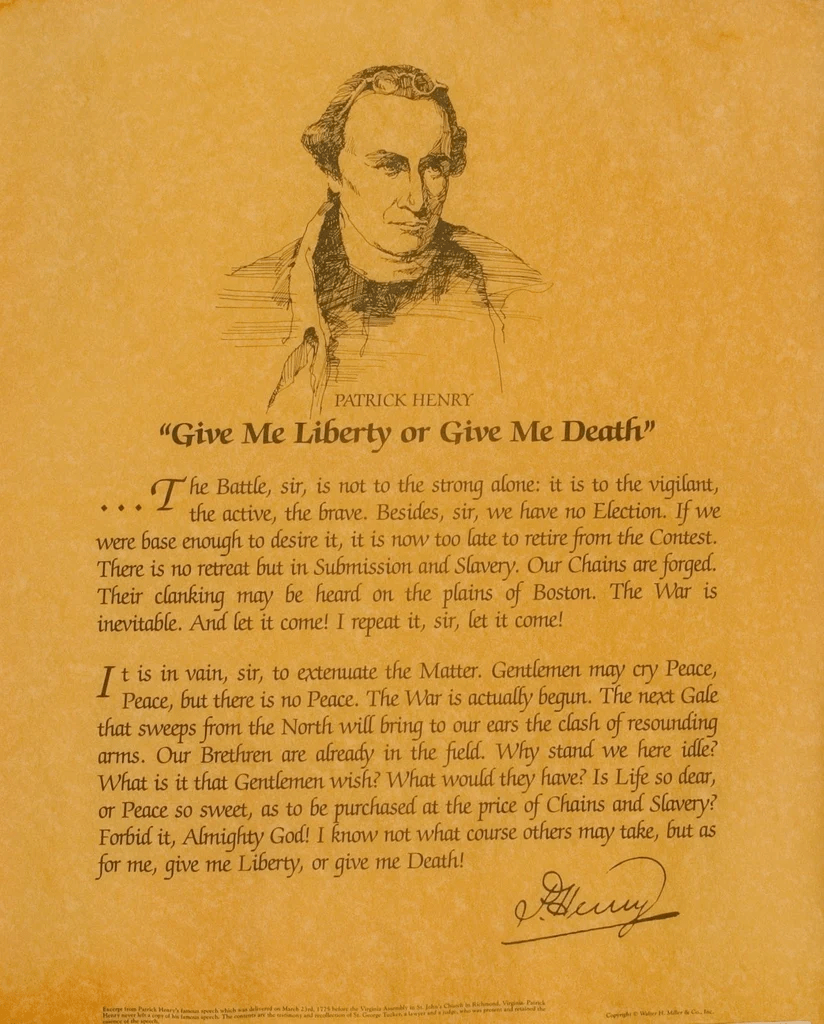
Words can also both start and end wars. Our own country again, is a perfect example of this. Consider the Revolutionary War – it really was sparked by the words of Patrick Henry. Henry was a failed store owner who, after working at his father-in-law’s tavern decided to educate himself and become a lawyer and in a fiery speech he gave in 1775 in Virginia, on the eve of the American Revolution. Henry was already known as a brilliant, fiery orator in 1775. Some said that he spoke like the revivalists of the Great Awakening, whose meetings he had attended as a boy in the mid-1700s. Henry called on his fellow colonists to muster the courage to fight. “I know not what course others may take,” Henry thundered, “but as for me, give me liberty or give me death!” Part of the moral urgency of the short speech came from its repeated invocations of the Bible, especially the prophet Jeremiah. As was Henry’s style, “Liberty or Death” was part sermon, part speech.
But that was starting a war. A famous speech that ended a war, again, came from our own nation.
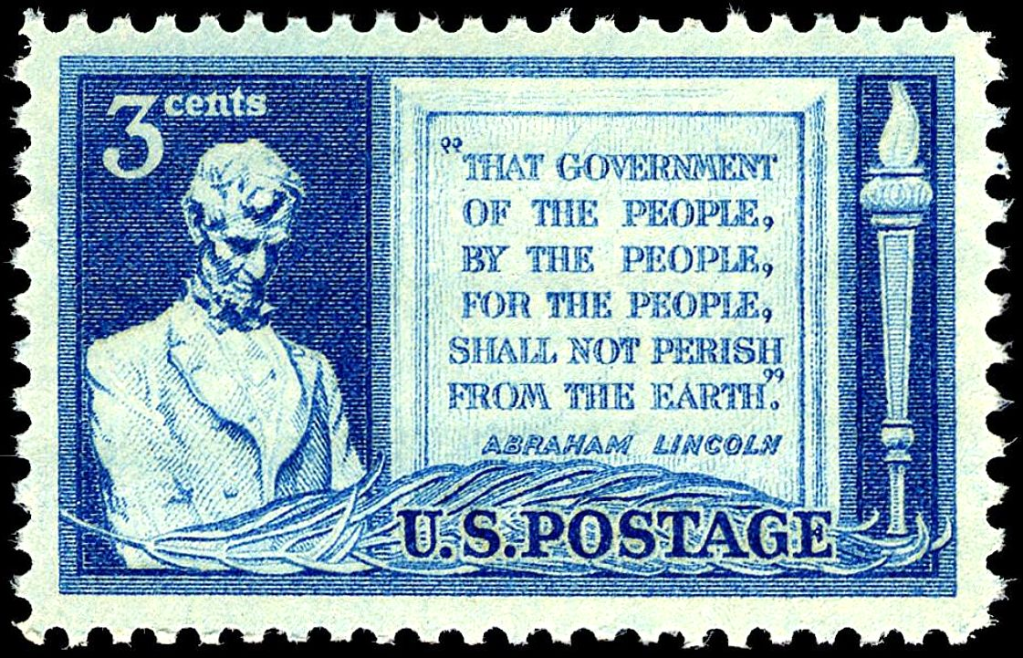
David Wills, as part of the committee organizing the November 19th 1863 dedication ceremony at the opening of the national cemetery at Gettysburg, had been tasked with assembling speakers and working out the itinerary of the day. He was lauded for having booked one of the most famous orators at the time – a man named Edward Everett. Everett’s presentation was slated to be the main speech of the day. His now seldom read speech was 13,607 words in length was delivered over a two hour period and was standard for its time. However, President Abraham Lincoln was brought in to deliver “dedicatory remarks” before the closing benediction. Originally, he was just there a sign of solidarity. However, the night before the event when the growing crowds coming in to town saw he was there, Willis asked him if he would speak at the event, which he agreed to do. Lincoln delivered, extemporaneously, his now famous 271 word impassioned plea in a little over two minutes and is known to be the catalyst that ended the bloodiest conflict this nation had ever and has ever seen. And it wasn’t even written down.
In fact, scholars argued that the version that Lincoln DID end up putting on paper after the fact to share with the nation and the world after the war ended was not the exact same speech he delivered that fateful day. The closing line was said to have affected both sides of the conflict – of whom which representatives were present due to the nature of the cemetery – “It is rather for us to be here dedicated to the great task remaining before us—that from these honored dead we take increased devotion to that cause for which they gave the last full measure of devotion—that we here highly resolve that these dead shall not have died in vain—that this nation, under God, shall have a new birth of freedom—and that government of the people, by the people, for the people, shall not perish from the earth.” – that began the process of ending the war.
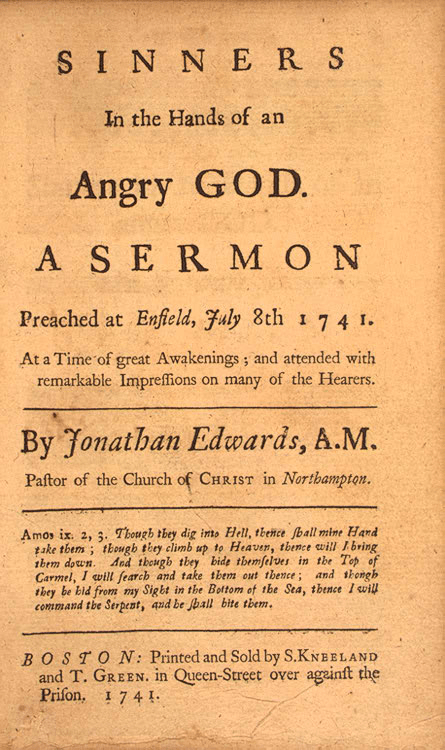
Words can start the journey for a person, or even in some cases, a nation to find their way back to Christ. Consider the sermon titled “Sinners in the Hands of an Angry God” by American theologian and reverend Jonathan Edwards of Northampton, Massachusetts. He first delivered it to his congregation to profound effect and then again to another congregation in Enfield, Connecticut. Like Edwards’ previous works, it combined vivid imagery of sinners’ everlasting torment in the burning fires of Hell with observations of the world and citations of Biblical scripture. It is Edwards’ most famous sermon and a fitting representation of his preaching style. It is widely studied by Christians and historians and was a highly influential sermon of the Great Awakening, emphasizing God’s wrath upon unbelievers after death to a very real, horrific, and fiery Hell. The underlying point is that God has given humans a chance to confess their sins. It is the mere will of God, according to Edwards, that keeps wicked men from being overtaken by the devil and his demons and cast into the furnace of Hell – “like greedy hungry lions, that see their prey, and expect to have it, but are for the present kept back by God’s hand.” Mankind’s own attempts to avoid falling into the “bottomless gulf” due to the overwhelming “weight and pressure towards hell” are insufficient as “a spider’s web would have to stop a falling rock”. This act of grace from God has given humans a chance to believe and trust in Christ. Edwards provides much varied and vivid imagery to illustrate this main theme throughout.
Most of the sermon’s text consists of ten “considerations”:
1. God may cast wicked men into Hell at any given moment.
2. The wicked deserve to be cast into Hell. Divine justice does not prevent God from destroying the wicked at any moment.
3. The wicked, at this moment, suffer under God’s condemnation to Hell.
4. The wicked, on earth—at this very moment—suffer a sample of the torments of Hell. The wicked must not think, simply because they are not physically in Hell, that God (in whose hand the wicked now reside) is not—at this very moment—as angry with them as he is with those he is now tormenting in Hell, and who—at this very moment—feel and bear the fierceness of his wrath.
5. At any moment God shall permit him, Satan stands ready to fall upon the wicked and seize them as his own.
6. If it were not for God’s restraints, there are, in the souls of wicked men, hellish principles reigning which, presently, would kindle and flame out into hellfire.
7. Simply because there are not visible means of death before them at any given moment, the wicked should not feel secure.
8. Simply because it is natural to care for oneself or to think that others may care for them, men should not think themselves safe from God’s wrath.
9. All that wicked men may do to save themselves from Hell’s pains shall afford them nothing if they continue to reject Christ.
10. God has never promised to save mankind from Hell, except for those contained in Christ through the covenant of Grace.
Reverend Stephen Williams was in attendance at the Enfield sermon, with his diary entry for that day containing the following account of the congregation’s reactions during and after the sermon:
Before the sermon was done there was a great moaning and crying out through the whole house — “What shall I do to be saved?” “Oh, I am going to hell!” “Oh what shall I do for a Christ?” and so forth — so that the minister was obliged to desist. The shrieks and cries were piercing and amazing. After some time of waiting, the congregation were still, so that a prayer was made by Mr. Wheelock, and after that we descended from the pulpit and discoursed with the people, some in one place and some in another. And amazing and astonishing: the power of God was seen and several souls were hopefully wrought upon that night, and oh the cheerfulness and pleasantness of their countenances that received comfort. Oh that God would strengthen and confirm their new faith! We sang a hymn and prayed, and dispersed the assembly.
Although the sermon has received criticism, Edwards’ words have endured and are still read to this day. Edwards’ sermon continues to be the leading example of a First Great Awakening sermon and is still used in religious and academic studies.
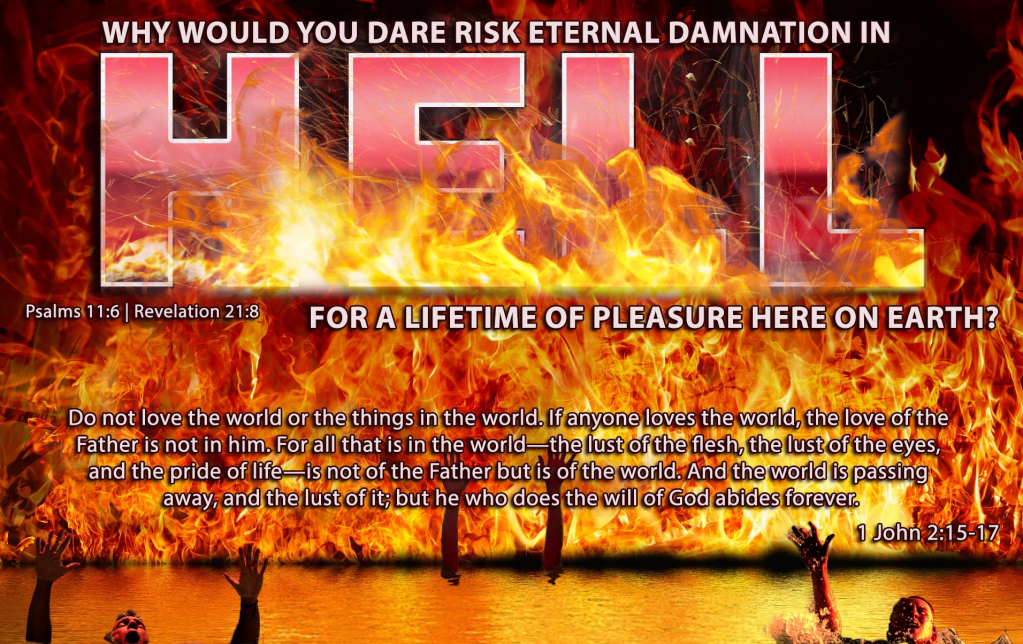
Words can cost you your soul.
The idea of “words costing someone their soul” is a concept that can be understood in different ways, particularly within religious or metaphorical contexts.
Here are some examples of words that could be said to “cost someone their soul” by leading to spiritual ruin, detachment from a higher power, or profound negative consequences:
1. Words of Deception and False Doctrine:
Promoting false teachings: In a religious context, spreading teachings that lead others astray from what’s considered to be the truth can be seen as spiritually damaging.
Deceptive flattery: Using flattery to manipulate or exploit others can lead to personal ruin.
2. Words of Sin and Wickedness:
Harsh and destructive words: Words that are reckless and hurtful can pierce like swords, while words of the wise bring healing.
Unwholesome or filthy talk: Engaging in language that is harmful or inappropriate can be considered spiritually detrimental.
Godless chatter: Indulging in discussions that lead to ungodliness.
3. Words of Pride and Self-Sufficiency:
Words that reflect pride and self-sufficiency: These attitudes can lead to spiritual ruin.
4. Words that lead to spiritual ruin in the Bible:
Certain words are highlighted in the Bible as having severe spiritual consequences, including careless words for which one will be accountable and words that can either acquit or condemn. The Bible also warns that those who live according to the flesh will die.
5. Words that Defile:
According to the Bible, what comes out of the mouth from a heart filled with wickedness is what truly defiles a person. The heart, including thoughts, can be deceitful, and words reflecting deceitful thoughts can lead to ruin if not aligned with God’s word. Additionally, words associated with negative emotions can reveal the condition of the soul.
In summary, words that lead to spiritual ruin are those that reflect a heart detached from God, truth, and love. It is important to note that the concept of “losing one’s soul” varies among different religious and spiritual beliefs. For some, it might refer to eternal damnation or spiritual ruin, while others might view it as a detachment from one’s true self or a spiritual decline.
Words can also be used to cut so deeply that they leave scars that never heal.
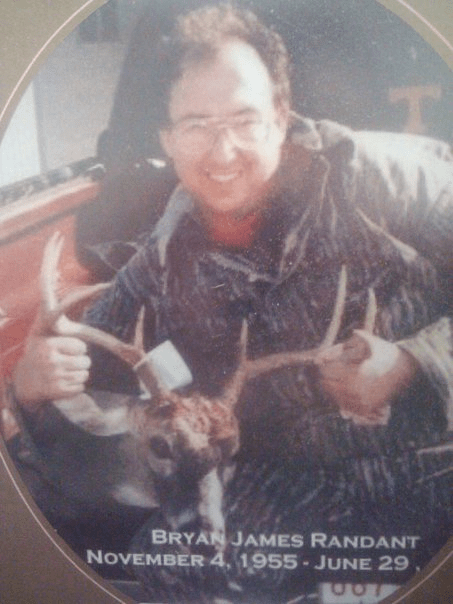
This one isn’t going to come with any historical citations or words from famous speeches. No…this one is going to be about a personal experience.
In June of 1998 Christie and I and an almost one year old David Jr. had an apartment about 20 minutes away from my parents’ house. My brother, who is 9 years younger than me, had gotten into an argument with our dad and it got pretty heated. Chris looked at him and said “I fudging hate you!” only he said the other word and not fudge. He calls me around 4 or 5 pm. and tells me about the argument and begs to come spend the night at our apartment. Christie had to work that night from 9 pm until 7 am the next morning, so I figured, why not. I go pick him up and then a few hours later Christie leaves with the car around 8 and goes to work. Keep in mind these were the days of dial up internet and before the times when everyone had cell phones. This meant if you wanted to be online, you were using the phone line in the house. If anyone tried calling while you were online, they just got a busy signal and could not get through. We were playing an MMORPG (massively multiplayer online roleplaying game) and eating pizza and just being goofballs.
Around 11:30 there is a frantic beating at the apartment door. I open it and it’s my aunt Virgie – my mom’s sister – she is in from Florida visiting my mom and dad. She’s obviously distraught and she screams at me about not being able to get through on the phone. I usher her inside and ask what is going on. She says “Something is wrong with your dad. He went by ambulance to Vandy and your mom and Dave are following them in her car. They left the house almost an hour ago but I had trouble finding your place – we need to go. Now.” I try calling the Waffle House we worked at to tell Christie but they were busy and we sadly had a bad practice at that Waffle House of taking the phone off the hook because we didn’t want to take the time to answer it to take to go orders so I end up getting the same result my aunt got when she had tried calling me – a constant busy signal. Unfortunately the Waffle House is in the opposite direction of the hospital so we won’t be able to stop and tell her what is going on and just frantically grab the diaper bag and go to her car, which is a little hatchback and we have no car seat; it’s in our car with Christie at the Waffle House. On top of that my aunt doesn’t know her way around Nashville so I have to drive her car so she is sitting in the back seat holding my infant son who isn’t in a car seat and we head to the hospital. We find out when we get there that dad is in surgery, My cousin explains that while they were examining him in the ER his eyes rolled back in his head and he slipped into a coma and was rushed into emergency brain surgery. Around about 4 a.m. I was able to finally get through to the Waffle House and tell Christie what was going on and she leaves and heads to the hospital – dad is still in surgery. The doctors come out around 9 or 10 a.m. and tell my mom they have finished but tell us the next 12-24 hours will be critical to determine what happens next and that we should go home and get some rest. Around this same time my dad’s parents, siblings, aunt and uncle have all arrived from Illinois. After a debriefing, everyone goes back to mom and dad’s to get some food, shower, and a couple of hours of sleep.
The phone rings early the next morning and it’s the hospital telling my mom we should get there as quickly as we can. About 15 people then load into multiple vehicles and head out. When we get there they bring me, my brother, Christie, my mom and my dad’s parents into a private consultation room – the rest of the family are told to wait in the hall. They tell us that in the early hours of the morning that dad’s blood pressure had bottomed out and they had to hit him with the paddles to re-establish a heart rhythm but when they did his brain hemorrhaged onto his spinal cord and that he was now on life support. They said that IF he came off of life support, he MIGHT survive. They said he may never open his eyes again, but even if he did open his eyes, that would be all he would do. He would never be able to speak again. He would never be able to move. Those areas of his brain had been damaged too badly. For all intents and purposes, he would likely be in a persistent vegetative state. They then told my mom that she needed to decide how she wanted to proceed and told us we should head home, that there was nothing else to do there and that they didn’t need an immediate answer. So…we leave the hospital again. I rode with my mom and my uncle Dale – he was my dad’s youngest sibling – and his wife in their car. My mom loses it in the car and says “I just don’t know what to do…I don’t know what to do.” Keep in mind, no one in my family knows the Lord. My uncle, using colorful adjectives says he doesn’t want to talk about it anymore and turns the radio on – when he does the Lynyrd Skynyrd song “Freebird” comes on and by the time it is over everyone in the car is sobbing like crazy and I look at my mom and say “I think you just got your answer.”
For context, my dad was an avid hunter and fisherman, worked on cars and computers and was not the kind of guy who would want to be kept alive artificially or in the state they said he would be in. The next day we all went back to the hospital and my mom made the difficult decision to turn the machines off. He took 2 or 3 breaths after the respirator stopped breathing for him and he was gone. My brother just stood there, white as a sheet, emotionless. Everyone else was crying – saying goodbye to him and things of that nature but Christ just stood off in the corner of the room. His life spiraled after that day. He found out he couldn’t play football anymore as a result of having the same genetic disorder that caused my dad’s issues in the first place. He then failed 9th grade 3 years in a row and eventually dropped out of high school. He never worked a steady job and by 28 had suffered a massive heart attack himself and barely survived. He would tell me, 20 years later, about 4 years after his own near-death experience, that he still has never forgiven himself for the last thing he ever said to dad. He still carries that pain and those scars with him to this day. I have tried several times over the last 3 years to witness to him and explain that Jesus could take that pain away and heal those wounds that time only made worse but he still has not chosen to take those steps.
Allow me to quote the same school yard colloquialism I did last week when I told you what we would discuss this week but with the correction I believe is needed “sticks and stones may break my bones…but the reality is that your words can cause more damage than you can imagine” Choosing your words wisely is one of the biggest understatements of all time. From the smallest of words spoken in vain to the mightiest speeches to start a revolution, end a war, or heal a nation every word has meaning and many have consequences.
Give me an example of a time that profoundly sticks out to you where you said something you wish you could take back.
Have you asked God to forgive you for that action?
If you haven’t, let’s ask Him tonight.
Let’s let nothing unresolved from words spoken stand between us and our eternal salvation.
-DC
 VRCF Young Adults
Leave a comment